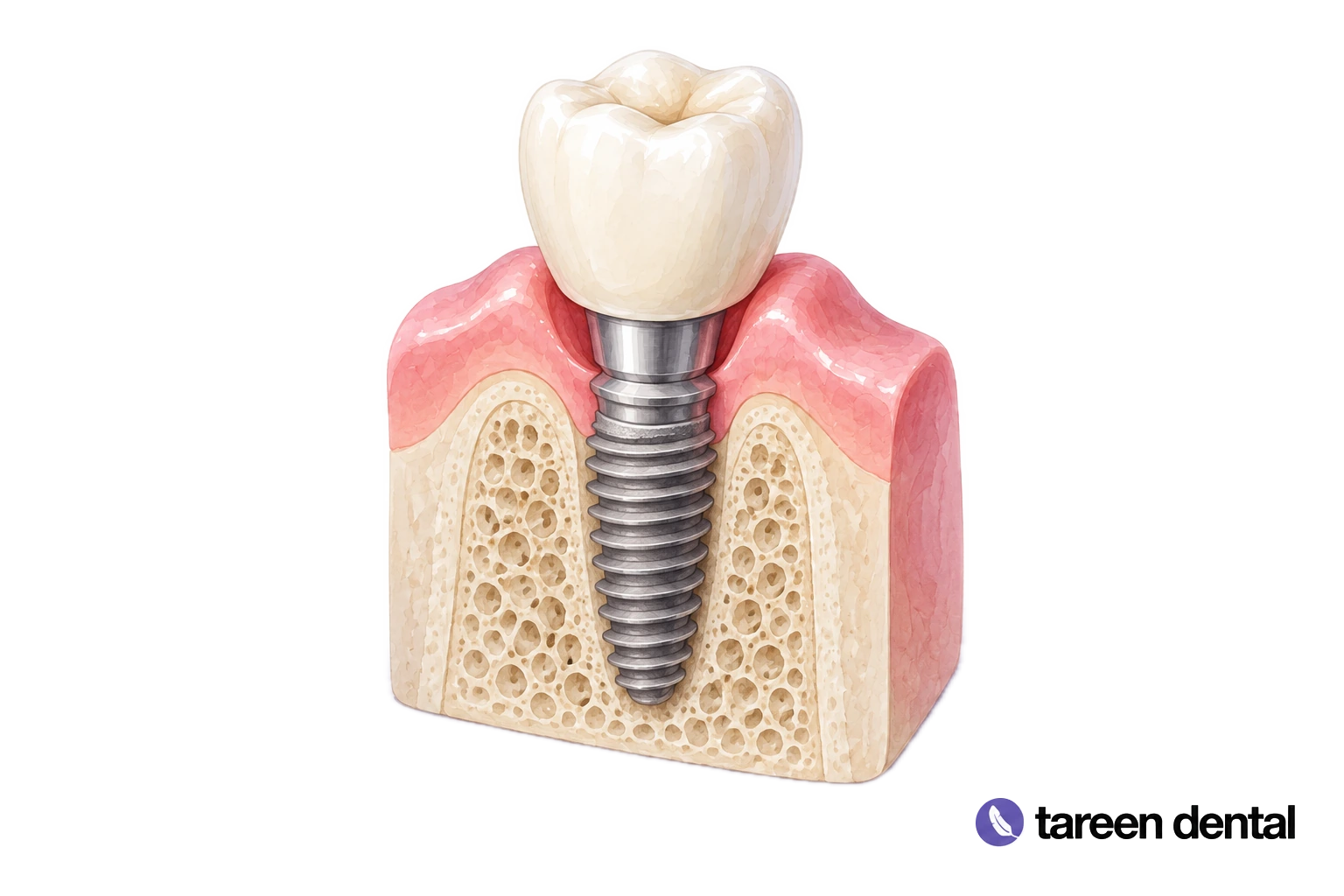
What an implant replaces
An implant is placed in the jawbone. A connecting component and a restoration, such as a crown, form the part used above the gum. Replacing several teeth may involve a different design from replacing one tooth. Implants are not the only approach: a bridge or removable appliance may also be considered, depending on the mouth and the person's priorities. Our implant overview introduces the treatment, while crowns and bridges explains related restorations. An assessment compares options rather than assuming an implant is suitable whenever a tooth is missing.
Implant treatment videos
Dental implant
Implant dentures
Implant bridge
Assessment and planning
The dentist reviews your dental and medical history, examines the teeth and gums, and considers the available supporting bone. Imaging may be recommended to assess anatomy and guide planning. Discuss medications, previous treatment, smoking, changes in health and the reasons you are considering replacement. Gum disease or other oral-health issues may need attention first. Ask who would provide each stage, whether any referral is needed and what records will be used. You can meet our dental team before the appointment and bring questions about the proposed sequence or alternatives.

Bridge versus an implant
Patient education by Spear Education. Your dentist can explain which options apply to you and whether a referral is needed.
Treatment stages and timing
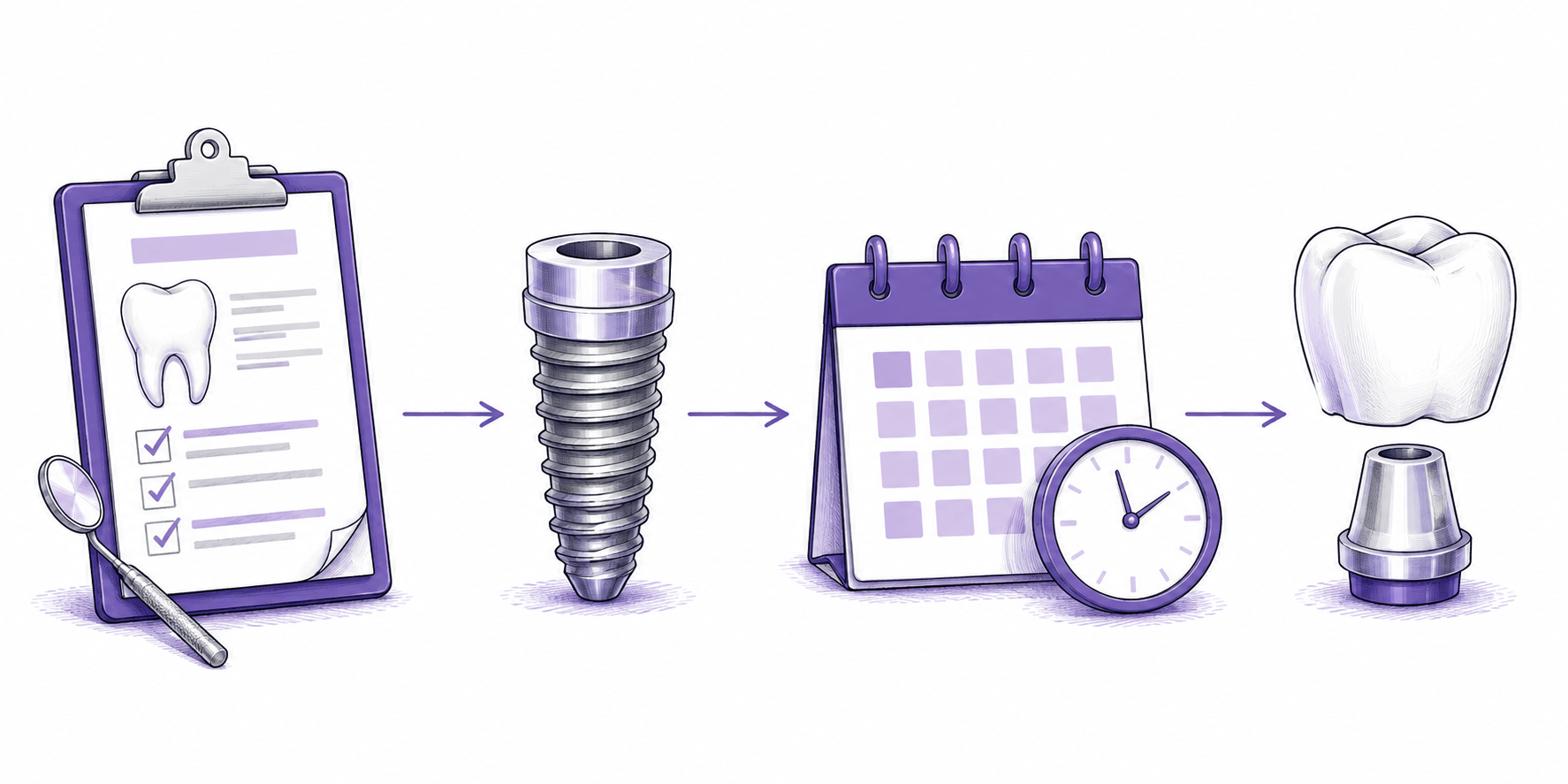
The sequence can include preparation of the mouth, implant placement, a period of healing, and fitting the restoration after further checks. Healing and treatment planning often extend over months, but the interval is individual. Additional procedures, the condition of the site and the restoration design can affect the schedule. The first consultation is a chance to explore your options and understand the stages before planning any placement. Ask what will happen between stages, what temporary arrangements may be considered and how progress will be assessed. An individualized plan is more useful than a fixed timeline applied to every patient.
Single implant for a back tooth
Patient education by Spear Education. Your dentist can explain which options apply to you and whether a referral is needed.
Why candidacy is decided by examination
The health of the gums, bone and surrounding teeth matters, as do medical considerations and the ability to maintain the restoration. A photograph or description of a missing tooth cannot establish suitability. The dentist will discuss anticipated benefits, risks, alternatives and the possibility that additional treatment or a different approach is appropriate. Implants can have complications and require monitoring; ongoing cleaning and review are important to their care. If chewing is difficult, explain which foods or movements cause concern so the assessment addresses function as well as the space left by a missing tooth.
Looking after an implant restoration
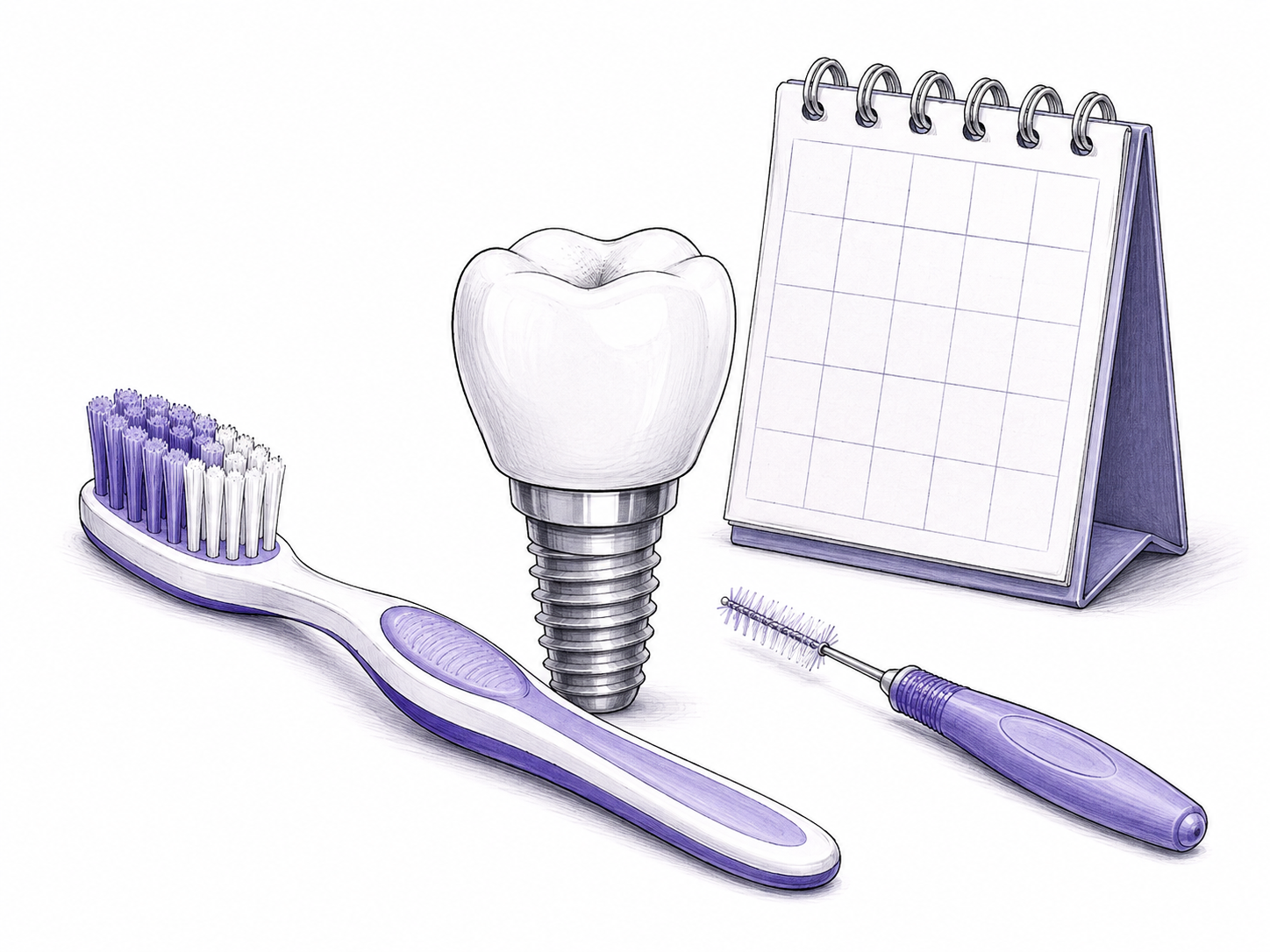
Clean around an implant restoration and attend the review schedule recommended for you. The cleaning method may differ depending on whether the restoration is a single crown, a bridge or part of an appliance. Ask for instruction on reaching the gumline and spaces beneath the restoration. Report bleeding, swelling, loosening or a changed bite promptly. The living gum and bone around an implant need care too. The team can explain what to monitor between visits and when additional checks may be needed. Ongoing care is part of the treatment discussion from the outset.
Implant-retained removable denture
Patient education by Spear Education. Your dentist can explain which options apply to you and whether a referral is needed.
Common questions
Is an implant right for everyone with a missing tooth?
No. Suitability depends on an assessment of oral health, bone, medical history and other factors. Alternatives may be appropriate.
Is the implant the same as the crown?
No. The implant sits in the jawbone; the crown or other restoration is supported above it through connecting components.
How long does implant treatment take?
Treatment often involves stages over several months. The actual timeline depends on healing, the site and any additional care required.
Are implants a lifetime replacement?
How long an implant lasts varies. Regular cleaning and monitoring support its care, and further treatment may sometimes be needed.
Can I compare an implant with a bridge?
Yes. An assessment can compare the requirements and limitations of each option, including effects on nearby teeth and ongoing maintenance.
Explore tooth-replacement options
Learn about implants and bridges, and bring your questions about the options to a consultation.