
Why Dental Treatment May Happen in Stages
From the clinical portfolio of Dr. Fareed Tareen. Educational guide published by Tareen Dental.
One step at a time
A treatment plan can feel easier to understand when you know what is happening now, what comes later and which decisions are still open. Asking for that explanation is entirely reasonable, particularly when a plan includes more than one type of care.
Learn about the procedure
Bridge versus an implant
A general tooth-replacement options video. The brief phase-one caption does not identify a bridge or implant as the treatment in this case.
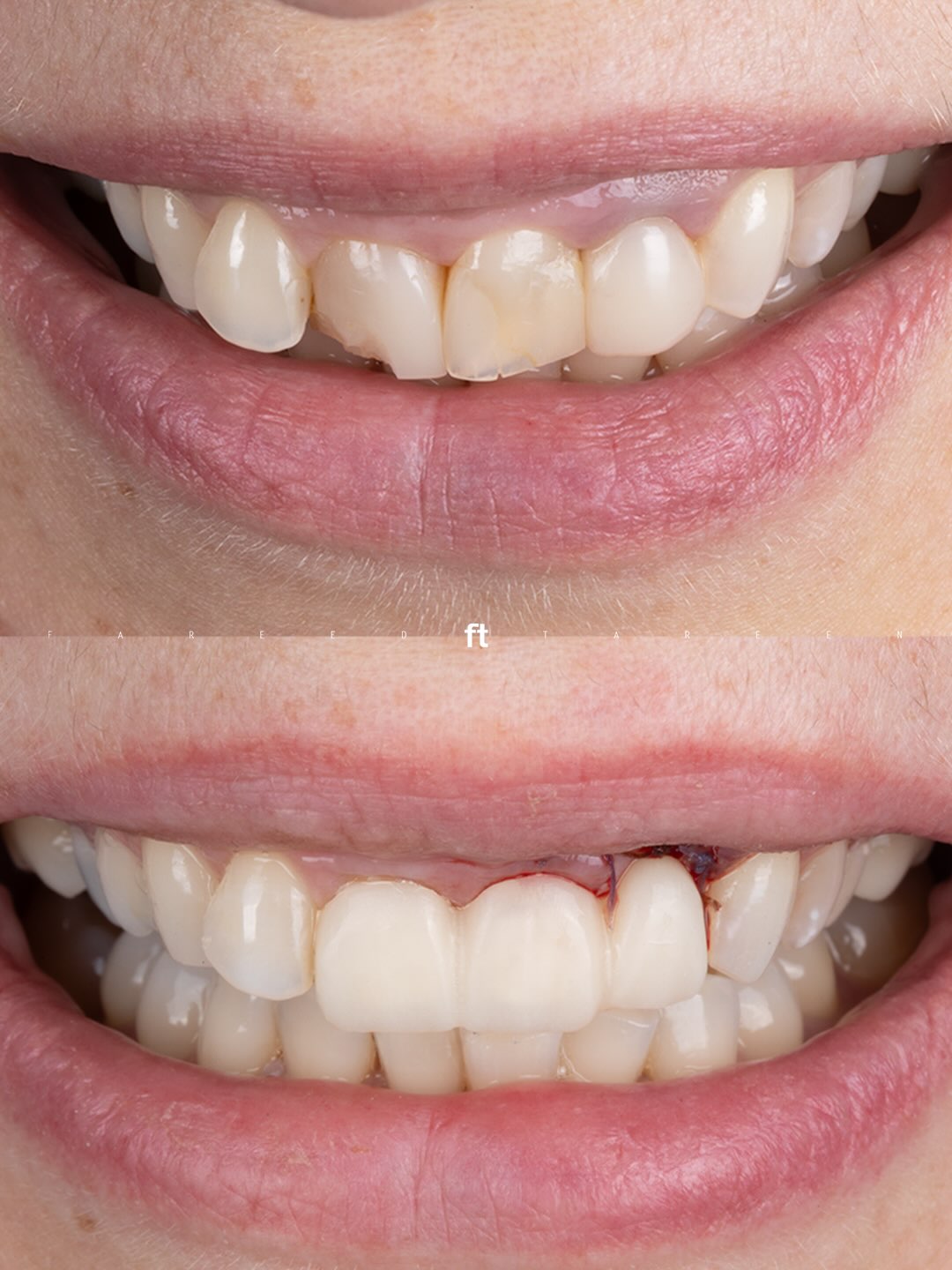
A phase-one example
The portfolio caption describes this case as the intersection of restorative and surgical care, phase one. That is the limit of the documented treatment description. The later photograph is therefore labelled as phase one, not as a final or healed result. Specific procedures, materials, fees and timelines are not supplied by the caption.
Why labels matter
A temporary stage, an insertion-day image and a later follow-up image answer different questions. When looking at a gallery, it is helpful to know which moment is being shown. A photograph alone cannot tell you whether all planned treatment has finished or whether more appointments are expected.
Questions that make a plan clearer
What is the purpose of the first stage? What will I have in place between appointments? Which decisions depend on the next assessment? What should I contact the team about while waiting? Can we discuss the costs by stage and what might change them? These questions can help you understand the plan before choosing how to proceed.
Learn, then discuss your own situation
The video below introduces bridge and implant options as general education, not as a description of this case. At Tareen Dental on Lauzon Road, we can talk through the services relevant to your situation and explain the next step in plain language.
Continue exploring
Shared with permission from Dr. Fareed Tareen's clinical portfolio. Each example records a particular stage of care; results and suitable treatments vary. Your dentist can help you understand what is appropriate for you.
General information, not an individual treatment plan.