What root canal treatment is intended to do
Inside a tooth is soft tissue called the pulp, containing nerves and blood vessels. When the pulp is irreversibly inflamed or infected, root canal treatment may be considered. The procedure removes affected tissue, cleans the internal spaces and seals them. Its purpose is to treat the problem within the tooth while retaining the tooth where appropriate. It is not recommended solely because a tooth has a large filling or feels sensitive. Our root canal overview introduces this treatment, but an examination is needed to determine whether it applies to your concern.
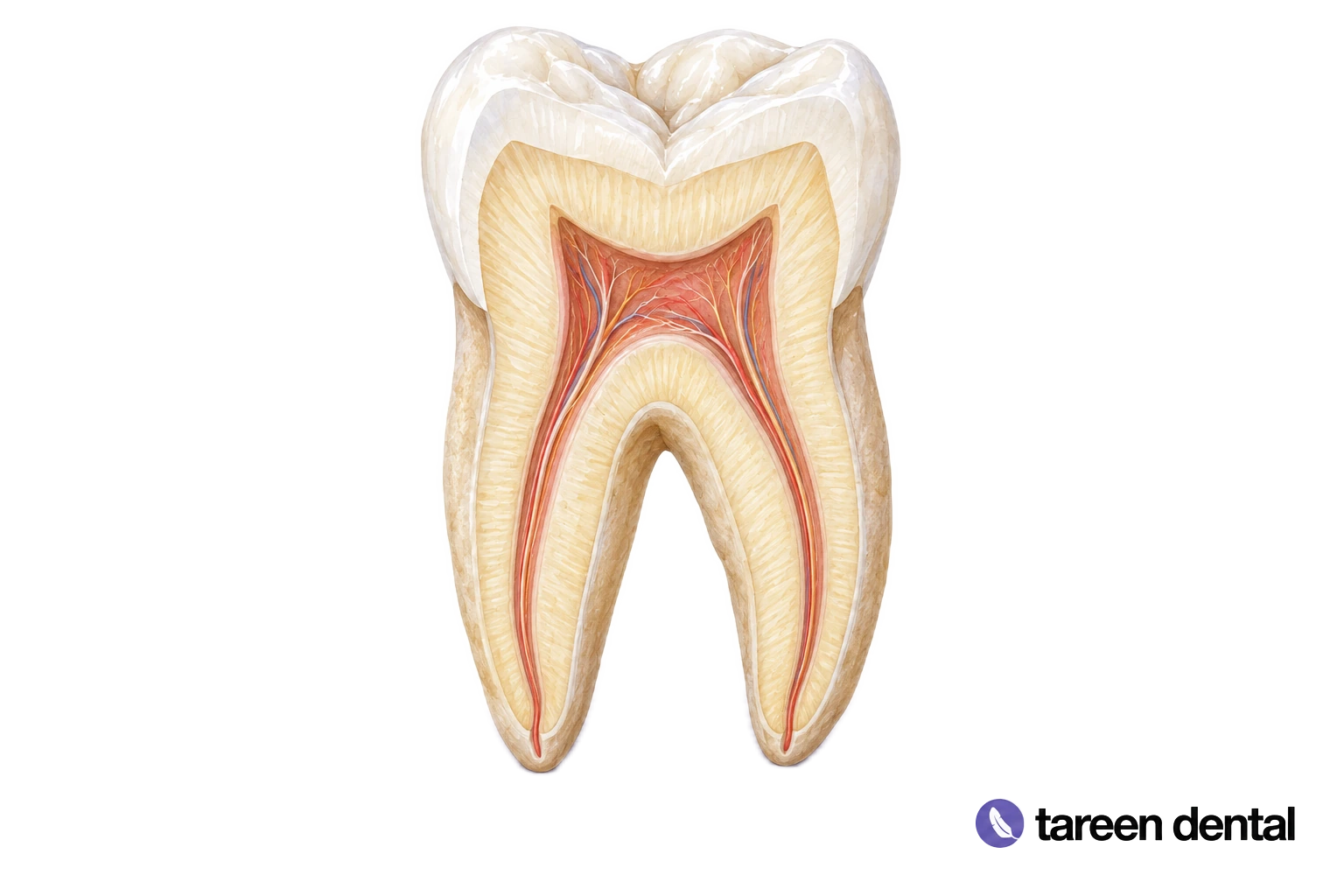
Symptoms that lead to assessment
Persistent tooth pain, prolonged sensitivity, tenderness when biting or swelling may lead a dentist to investigate the pulp and surrounding tissues. These symptoms can have other causes, and some affected teeth have few noticeable symptoms. Assessment may include questions about timing, examination, tests and X-rays when indicated. Explain any injury, previous restoration or change in symptoms. If pain or swelling develops before a planned visit, contact the office promptly. Our urgent dental guidance explains how to ask about assessment and when symptoms require emergency medical care instead of waiting for a dental appointment.
What the appointment can involve
The dentist discusses the diagnosis, alternatives, risks and proposed sequence before treatment. Local anaesthetic is commonly used, and the tooth is isolated during the procedure. An opening provides access to the internal canals, which are cleaned, shaped and filled. A temporary or other restoration may be placed as part of the sequence. The number of visits varies with the tooth and the clinical situation. Explain anxiety or previous experiences before the appointment and ask how to communicate during treatment. Your dentist can talk through what to expect and ways to support your comfort, recognising that each person's experience is different.

Root canal treatment
Patient education by Spear Education. Your dentist can explain which options apply to you and whether a referral is needed.
Restoration and follow-up
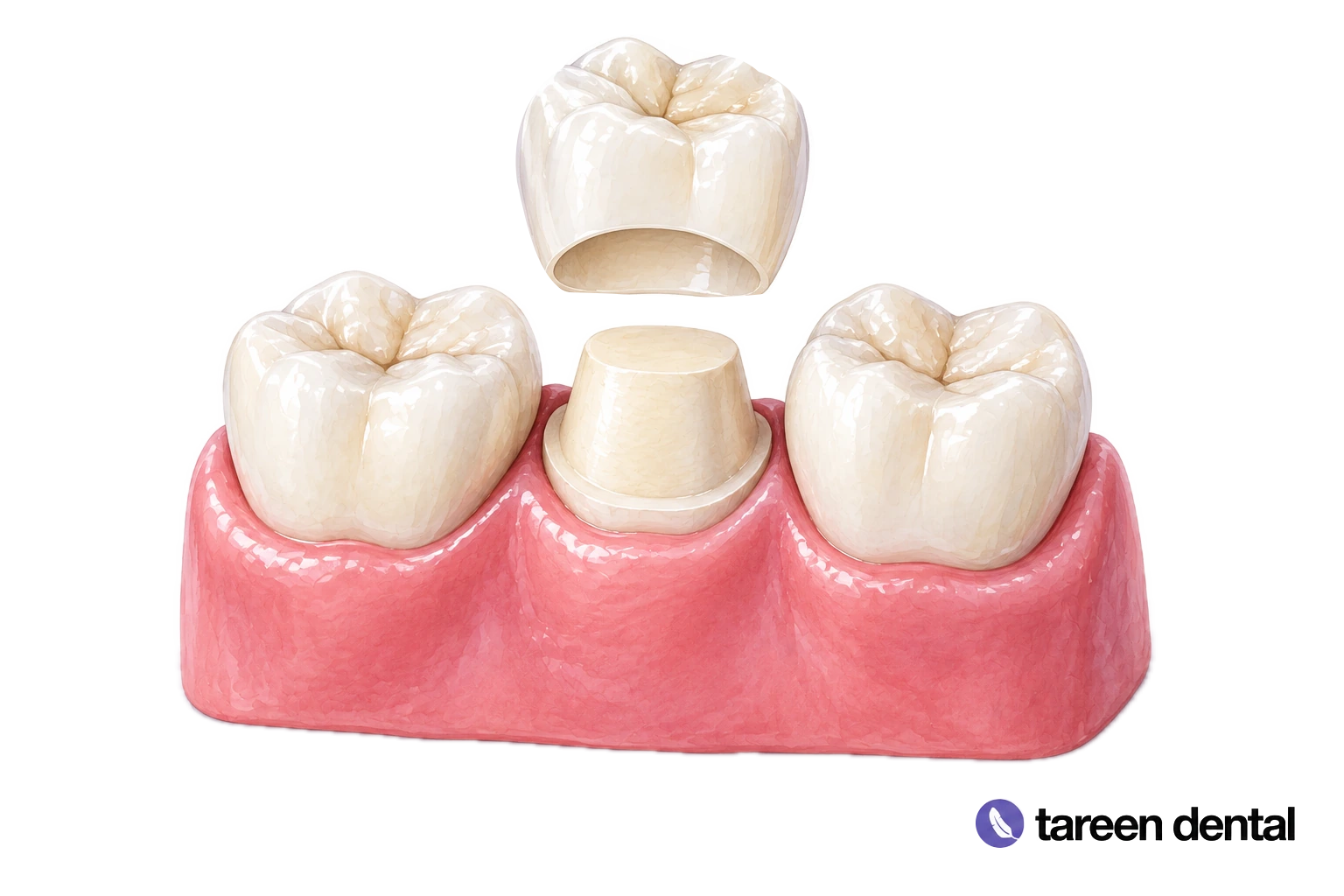
Treating the inside of the tooth and restoring its outer structure are related but separate parts of care. A filling or crown may be recommended depending on how much tooth remains, its location and the bite. Our dental crown guide explains why a crown may be considered, without assuming every root-treated tooth needs one. Follow the instructions given for chewing, cleaning and any temporary restoration. Attend the recommended review and report worsening symptoms, swelling or a loose temporary filling. Even when the tooth feels comfortable, follow-up helps check healing and complete any planned restoration.
Questions for your treatment discussion
Ask what the examination showed, whether the tooth is restorable and what alternatives are available. Discuss the expected number of visits, the final restoration and any need for referral. The decision is guided by your tooth, your health and the questions that matter to you. Bring your current medication list and relevant medical history. If you have previous images or treatment records, ask whether they would be useful. At Tareen Dental, you can arrange an assessment at the Lauzon Road practice to discuss the findings and the next step for your specific concern.
Common questions
Does tooth pain always mean I need a root canal?
No. Pain has several possible causes. Examination and appropriate tests help identify the source and whether this treatment is indicated.
Will I need more than one visit?
Possibly. The tooth, diagnosis and treatment sequence affect the number of appointments. Ask which stages apply to your case.
Is a crown always needed afterwards?
No. The final restoration depends on remaining tooth structure, location and bite. A crown is one possible recommendation.
What should I report after treatment?
Contact the office about worsening symptoms, swelling, a changed bite or a loose temporary restoration, and follow the specific instructions you were given.
Can I discuss alternatives?
Yes. Ask about the reasons for the recommendation, reasonable alternatives, risks and the follow-up each option would require.
Understand the next step
Explore the treatment and restoration options, then ask us how they relate to your tooth.