
An Upper Three-Unit Bridge: What the Case Photos Show
From the clinical portfolio of Dr. Fareed Tareen. Educational guide published by Tareen Dental.
Understanding a fixed bridge
A dental bridge is one way to replace a missing tooth. A traditional bridge uses crowns on neighbouring teeth to support the replacement tooth between them. The health of the supporting teeth and the wider treatment plan matter when deciding whether that approach is appropriate.
Learn about the procedure
Anterior bridge
See how a bridge can replace a missing front tooth. This educational animation explains the procedure; the photographs show the portfolio case.
What is documented here
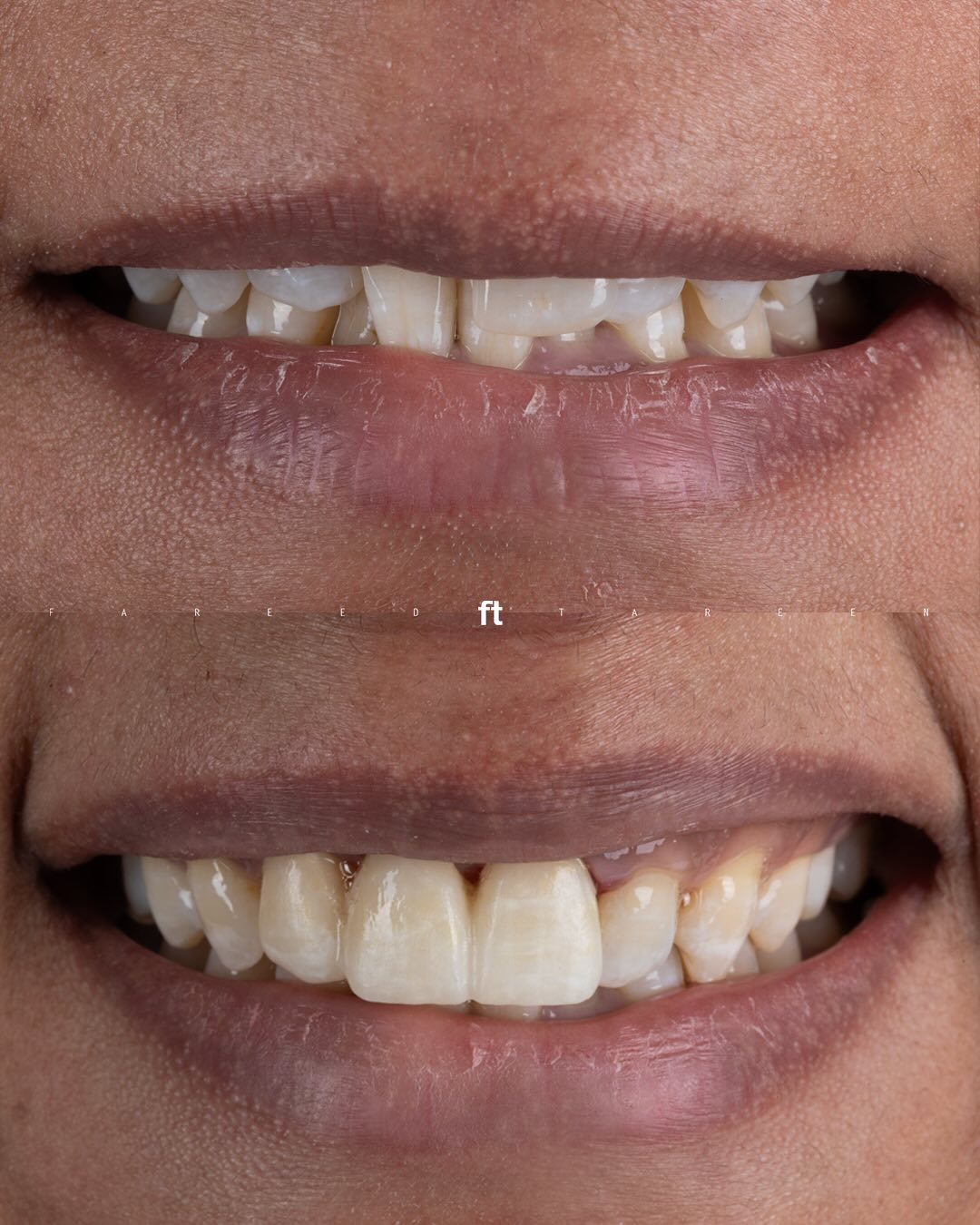
This portfolio post identifies the insertion day of an upper three-unit bridge. Its original before-and-after photographs are presented together, with the FT watermark preserved. The post also tags @amr.ramadan98; the caption does not specify that person's clinical role. We do not infer a restoration material or treatment location.
The importance of timing
An insertion-day photograph records a particular moment. It is not the same as a later follow-up assessment and does not establish how a restoration will perform over the years. Different photographs can also show different lip positions and lighting, so appearance is only one part of the discussion.
Questions about replacing a tooth
Would a bridge, implant or another approach fit my situation? What would each option involve for the neighbouring teeth? How would I clean around the replacement? What appointments, maintenance and costs should I plan for? The linked anterior bridge video offers a closer look at this type of restoration so you can bring more focused questions to your visit.
Talk through the choices
At Tareen Dental in Windsor, we can discuss the options in the context of your own teeth and priorities. There is no need to choose a bridge from a photograph alone. An examination and a clear explanation of the choices come first.
Continue exploring
Shared with permission from Dr. Fareed Tareen's clinical portfolio. Each example records a particular stage of care; results and suitable treatments vary. Your dentist can help you understand what is appropriate for you.
General information, not an individual treatment plan.