
Restorative Rehabilitation: Looking Beyond the Smile Photograph
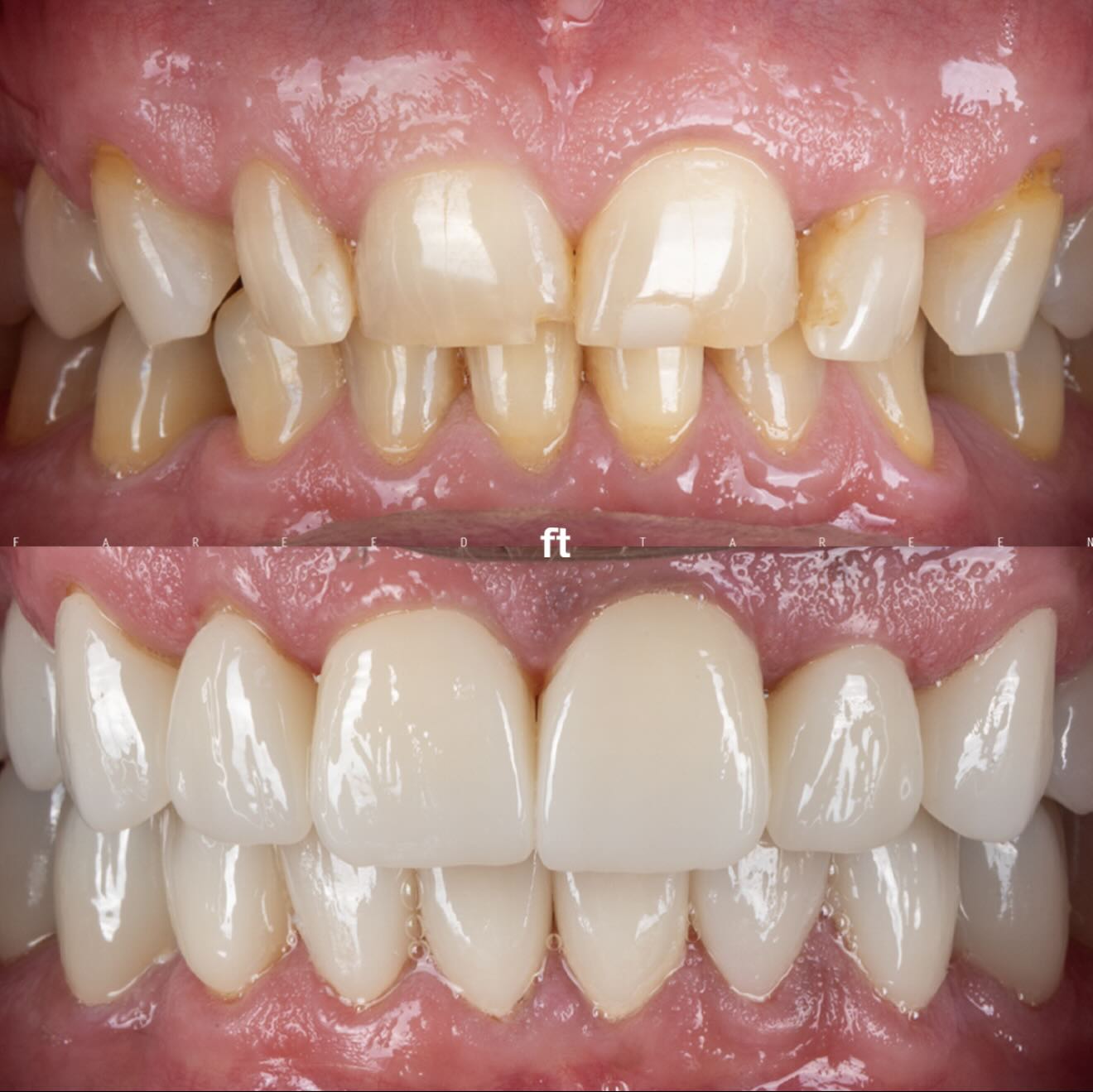
From the clinical portfolio of Dr. Fareed Tareen. Educational guide published by Tareen Dental.
Form and function belong in the same conversation
When several teeth are being considered for restorative care, the discussion can involve both their appearance and how they work together. It is reasonable to ask how the plan relates to everyday comfort, cleaning and eating, as well as what can be seen in a photograph.
Learn about the procedure
Diagnostic Wax-Up
Learn how a diagnostic wax-up helps with restorative treatment planning. This Spear animation explains the planning tool; it is separate from the clinical photographs.
The source and the timing
The original portfolio caption describes rehabilitation of form and function and specifically identifies the later image as immediate post-insertion. It credits @dentaltechlabs for finishing. The caption does not identify every restoration or its material, so this case is not labelled as a particular veneer or crown system.
What the comparison can and cannot tell you
The image documents visible changes at that stage. It does not establish long-term comfort, maintenance needs or a follow-up outcome. Those are good subjects to discuss with a dentist when looking at any restorative portfolio. Your own plan should be based on an examination and a conversation about priorities.
Understanding the plan
A diagnostic wax-up is a planning tool that can help you and your dentist discuss proposed restorative changes. The accompanying video explains how a wax-up is made and why it can be useful before restorative treatment. It offers a helpful starting point for questions about the plan, without assuming that every rehabilitation follows the same process.
Questions for a restorative consultation
Which teeth would need treatment, and why? What alternatives are available? How will we assess the bite and review the restorations afterwards? What is included in the estimated cost? Our Windsor team welcomes these questions and can help break a larger plan into understandable decisions.
Continue exploring
Shared with permission from Dr. Fareed Tareen's clinical portfolio. Each example records a particular stage of care; results and suitable treatments vary. Your dentist can help you understand what is appropriate for you.
General information, not an individual treatment plan.