
A diagnosis of gum disease can raise an immediate question: is this something that can improve with cleaning, or has lasting damage occurred? Gingivitis and periodontitis describe different findings, and knowing which applies helps you understand the treatment plan.
Learn more about your care
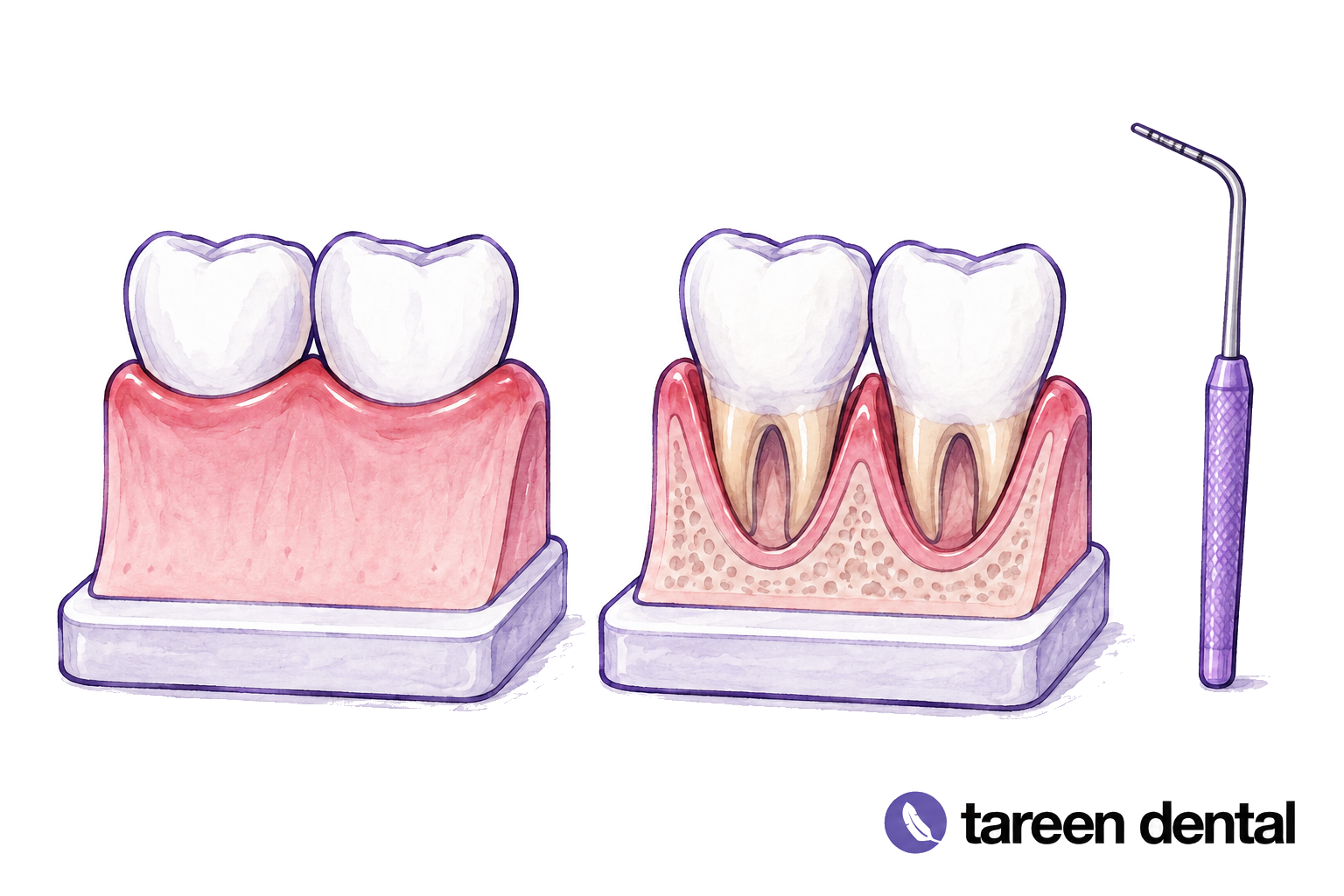
Gingivitis
Periodontitis
Inflammation versus loss of support
Gingivitis involves inflamed gums without the attachment and bone loss that define periodontitis. Plaque-related gingivitis can often improve with effective daily cleaning and professional care. Periodontitis affects the tissues supporting the teeth and needs assessment and treatment directed at that disease. NIDCR gum-disease information.
Bleeding or red gums do not tell you the stage on their own. Some people have significant disease without obvious pain, so the absence of discomfort is not a reliable all-clear.
How the diagnosis is made
The dental team looks at gum appearance, bleeding, pocket measurements and tooth support. X-rays may be appropriate to assess bone levels. Medical history, tobacco exposure and previous gum treatment help put the findings in context.
Ask the clinician to explain your own measurements and whether there is evidence of support loss. A clear explanation should connect the findings to the proposed treatment rather than leaving you with an unfamiliar label.
What changes after diagnosis
Care may include professional deposit removal, home-care coaching and a follow-up visit to assess the response. More advanced or complex disease may require referral to a periodontist. Treatment choices and maintenance intervals should reflect the individual findings; a single routine cleaning is not a universal solution.
You can help by identifying the parts of home care you find difficult and keeping planned reassessments. Improvement is evaluated through clinical changes over time, not just how fresh the mouth feels immediately after cleaning.
Learn about dental hygiene care at Tareen Dental. Contact our Windsor clinic to arrange an assessment if you have been told you have gum disease or would like an explanation of a previous diagnosis.
Sources and Further Reading
General patient education, not a diagnosis or personalised treatment plan. Contact a dental professional about your symptoms.
General information, not an individual treatment plan.