
Choosing a toothbrush starts with comfort and what makes daily brushing easier for you. A useful choice is one you can hold comfortably, move around every surface and use consistently. Electric and manual brushes can both be part of effective home care.
Learn more about your care
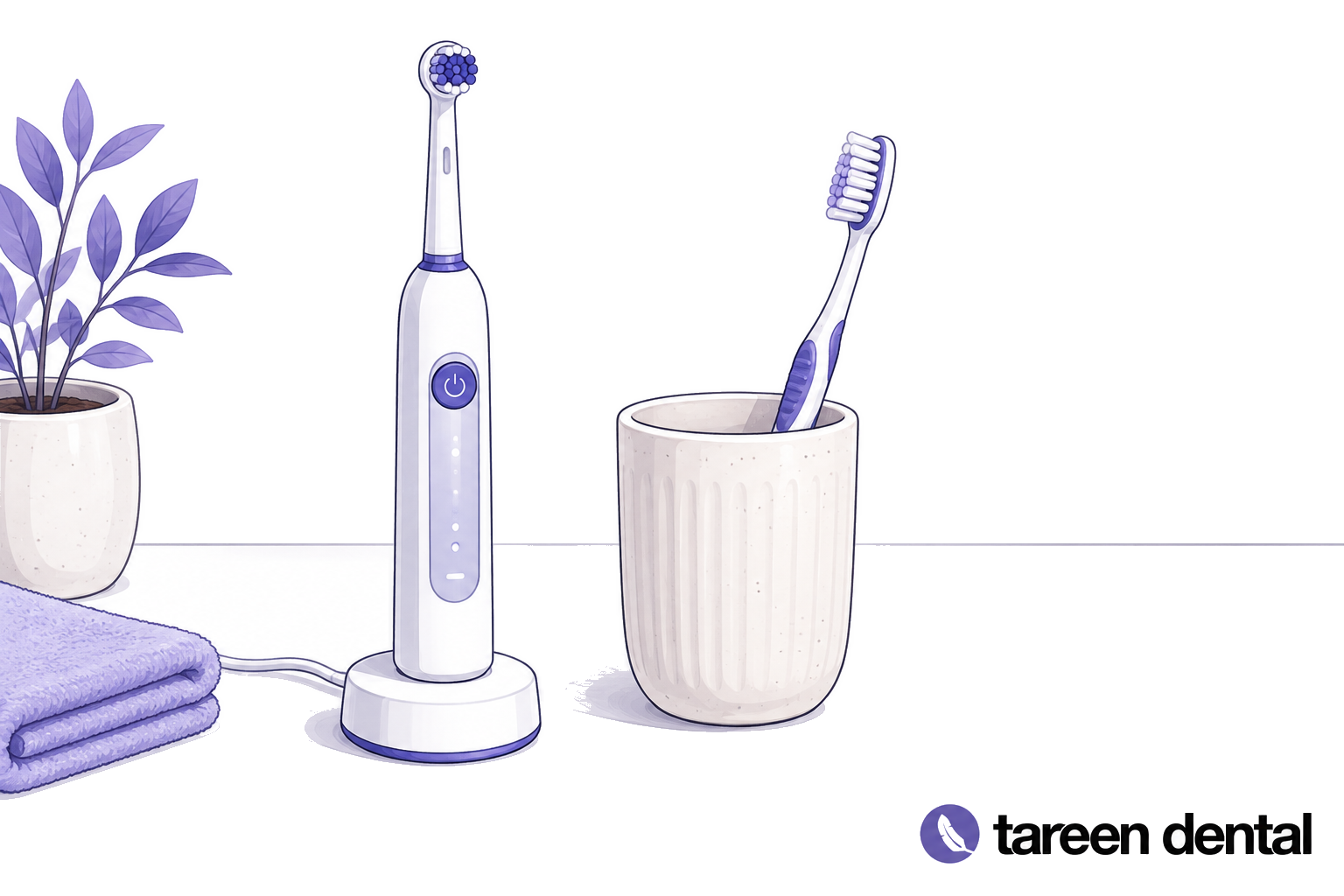
Manual versus Electric Toothbrush
Start with the problem you want to solve
If you already brush carefully with a manual brush, changing devices may not be your most important next step. If you struggle with hand movement, lose track of time or tend to press very firmly, selected features on a powered brush may make the routine easier. The ADA notes that people who find manual brushing difficult may prefer a powered option. Toothbrush guidance.
Compare the size of the head, the feel of the handle and how easy the controls are to operate. A bulky brush that is uncomfortable near your back teeth may spend most of its time cleaning the places you already reach well.
Look beyond the box
Think about the cost and availability of replacement heads. Check whether charging fits your bathroom and travel routine. A pressure alert or timer can offer helpful reminders. Ask for a demonstration of the features and how to reach each tooth surface.
With either type, use soft bristles and fluoride toothpaste. Clean between teeth separately, using a tool that fits your mouth. A powered brush does not remove the need for interdental cleaning or professional assessment of gum health.
Ask for feedback before buying again
A practical way to judge your routine is to ask which areas still collect plaque. Tell your dental hygienist whether brushing feels awkward, whether your gums bleed and whether particular teeth are difficult to reach. That information is more useful than a brand name alone.
Tareen Dental provides preventive dental care in Windsor. Bring your current brush or a photo of its head to your appointment so the discussion can focus on your actual routine. Arrange a visit if you would like help choosing a manageable approach.
Sources and Further Reading
General patient education, not a diagnosis or personalised treatment plan. Contact a dental professional about your symptoms.
General information, not an individual treatment plan.