
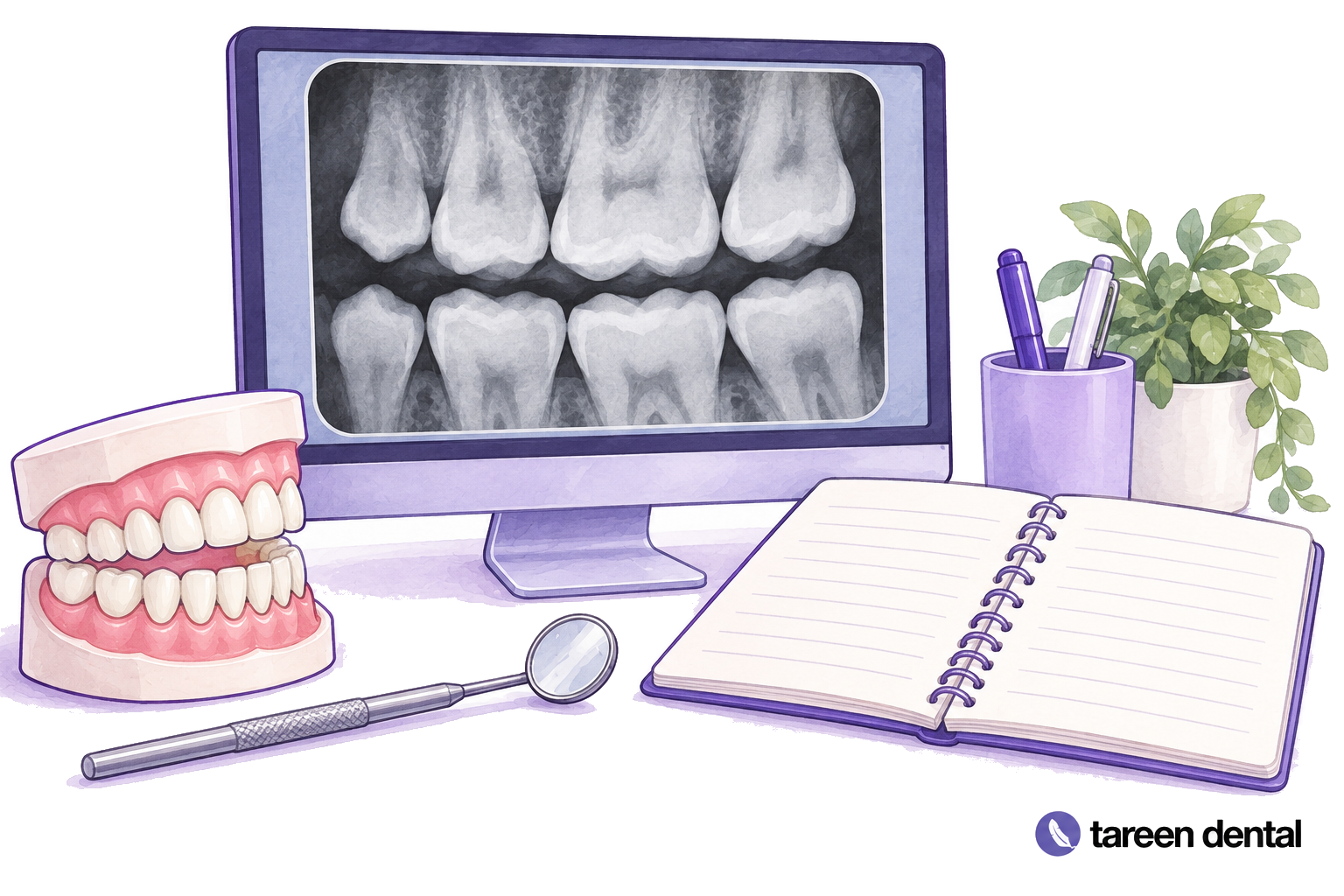
An X-ray recommendation should have a purpose. Dental images can reveal information that is not visible during an ordinary examination, but the right type and timing depend on the individual patient. It is reasonable to ask what the dentist hopes to learn.
Learn more about your care
First Visit: Comprehensive Exam
A dental examination helps your dentist decide which information is useful for your care. This video introduces the examination; you can ask how any recommended X-rays would help.
Start With the Clinical Question
Your history, symptoms, examination findings and disease risk help guide imaging decisions. The American Dental Association explains that X-rays are not automatically needed at every visit. A dentist may be looking for decay between teeth, information around a root or another finding relevant to your care.
Ask how the image could change the treatment plan. Your imaging plan is tailored to your oral health history, so it may differ from a friend's. Each recommended image should help answer a question about your care.
Bring Previous Records Into the Conversation
If another practice recently took images, tell the team and ask about arranging transfer. Previous images may provide useful information, although their age, quality and the area shown affect whether they answer today's question. The dentist can explain whether those images answer the current question or whether another view would help.
Mention pregnancy, relevant medical history and difficulty tolerating an imaging sensor. The team can explain the proposed procedure and how exposure is limited while following applicable local requirements. Your dentist can explain how the diagnostic benefit is balanced with radiation exposure.
Ask to See What Was Found
After imaging, ask the dentist to explain the relevant area in plain language. What finding is definite, what needs monitoring and how does it fit with the examination? An X-ray is one part of assessment rather than the entire diagnosis.
Learn about family dental examinations in Windsor or contact Tareen Dental to arrange a visit. Bringing your questions and available records helps make the appointment more informative.
Sources and Further Reading
General patient education, not a diagnosis or personalised treatment plan. Contact a dental professional about your symptoms.
General information, not an individual treatment plan.