
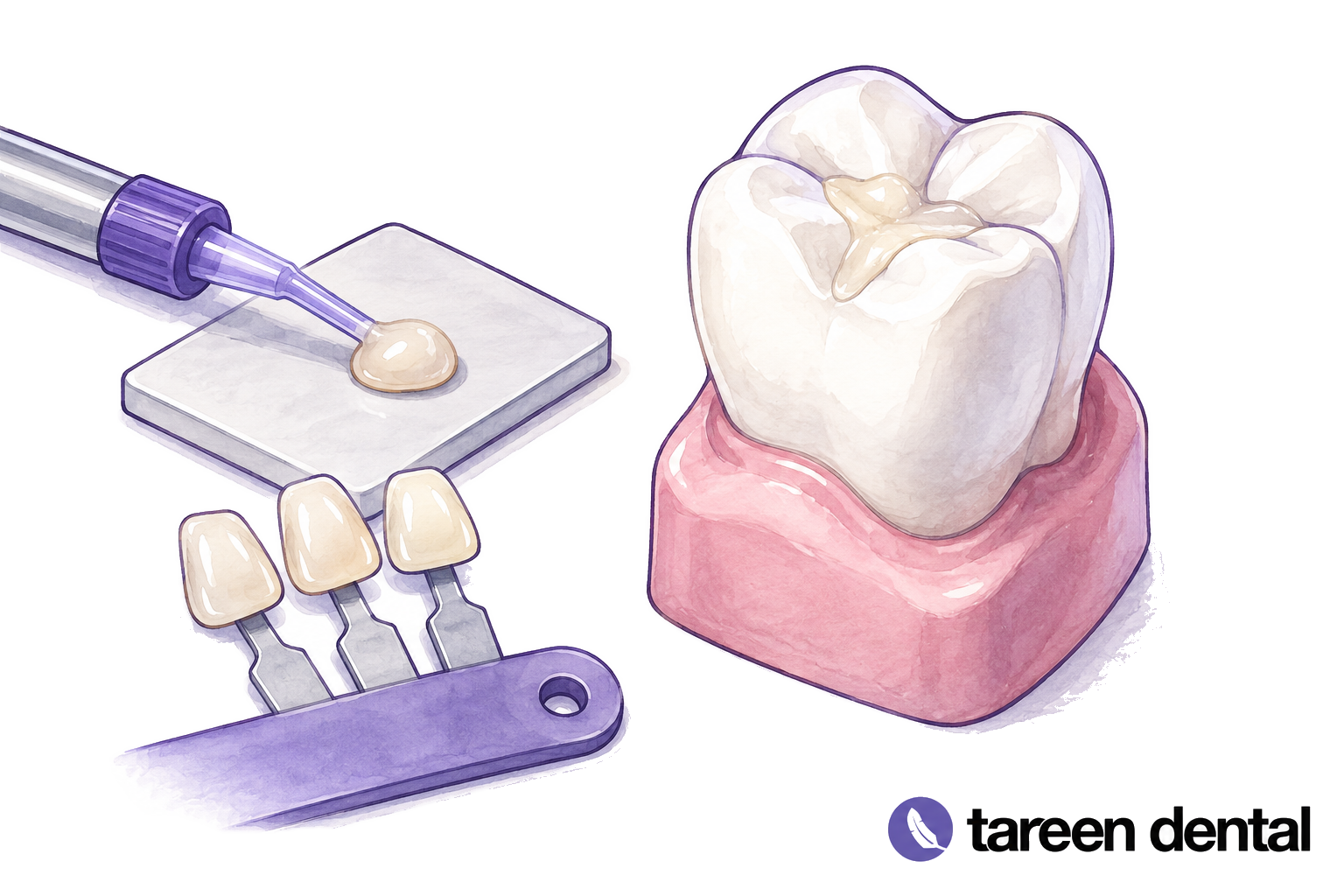
A tooth-coloured filling is intended to restore a tooth while blending with its surroundings. Colour is only one consideration, though. The amount of tooth remaining and the demands placed on it help determine which restoration is appropriate.
Learn more about your care
Composite Filling (Posterior)
What a filling does
A filling replaces damaged or decayed tooth structure after the tooth has been assessed and prepared. Composite resin is one material used for this purpose. NIDCR describes several filling materials and notes that more extensively damaged teeth may need a different restoration, such as a crown. Dental-filling information.
A filling does not make the surrounding tooth immune to future decay. Its edges and the rest of the mouth still need daily care and review.
Ask about the particular tooth
Useful questions include how large the damaged area is, whether the bite places extra stress on it and whether a direct filling offers enough support. The ability to isolate the area during treatment can also affect material selection. There is no single material that is ideal for every situation.
Discuss alternatives, anticipated maintenance and fees before treatment. Your dentist can discuss the expected appearance and ongoing care, including how the filling may look in different lighting and when it may need attention.
After the appointment
Follow instructions about eating while numb and caring for the treated tooth. Contact the clinic if your bite feels uneven, pain increases or sensitivity persists rather than assuming you must simply get used to it.
Tareen Dental offers general restorative care in Windsor. Contact the team to arrange an examination and discuss whether a tooth-coloured filling is appropriate for your tooth.
Sources and Further Reading
General patient education, not a diagnosis or personalised treatment plan. Contact a dental professional about your symptoms.
General information, not an individual treatment plan.