
A toddler who clamps their mouth shut can turn a short routine into a daily struggle. The goal is to keep cleaning consistent while working out whether the difficulty is about timing, independence, sensation or discomfort.
Learn more about your care
Children's Toothbrushing Tips
Offer choices within the routine
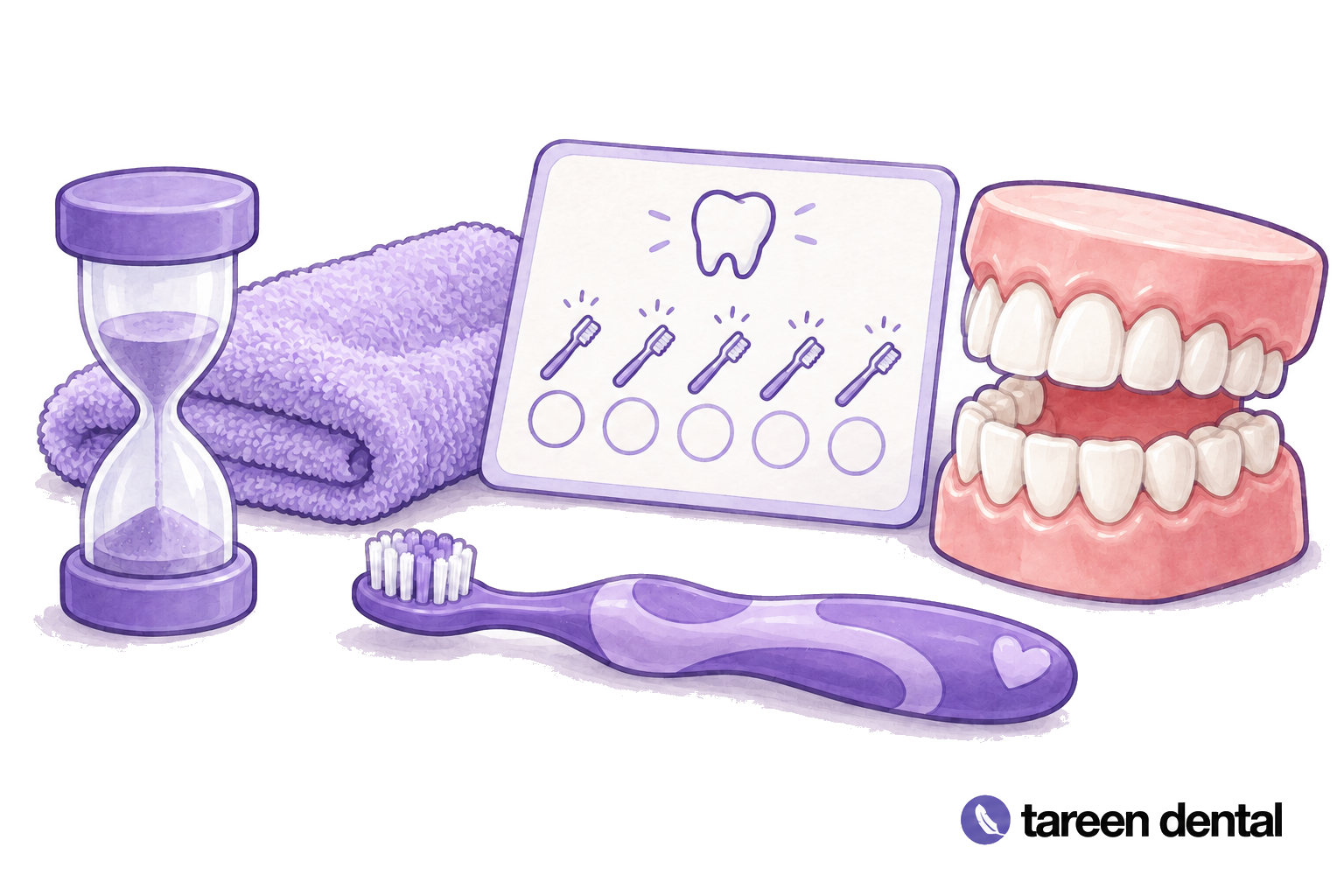
Let your child choose between two suitable brushes or decide which song to use. Allow a turn holding the brush, then explain that an adult will finish the cleaning. Young children still need an adult's help to reach all surfaces, even when they are eager to try brushing themselves. CDA infant and toddler guidance.
Try a predictable time before the child is exhausted. Use a small, soft brush and age-appropriate toothpaste advice from a dental professional. A large brush head or disliked flavour can make an already difficult routine harder.
Keep expectations calm and practical
Demonstrate brushing your own teeth with your own brush. Use simple explanations and praise participation without threatening dental treatment as a consequence. Avoid sharing brushes or turning the dentist into the person who punishes missed brushing.
If a technique feels unsafe or the child is highly distressed, ask the dental team for a demonstration and a plan adapted to your child. Sensory needs deserve accommodation rather than being treated as bad behaviour.
Rule out pain
A sudden refusal after previously tolerating brushing may warrant assessment. Mention a sore area, visible tooth change, bleeding or difficulty eating. Repeated resistance can have more than one cause, and an examination may clarify what needs attention.
At Tareen Dental, family appointments can include practical home-care coaching. Contact our Windsor team if brushing is consistently difficult or you suspect discomfort.
Sources and Further Reading
General patient education, not a diagnosis or personalised treatment plan. Contact a dental professional about your symptoms.
General information, not an individual treatment plan.