
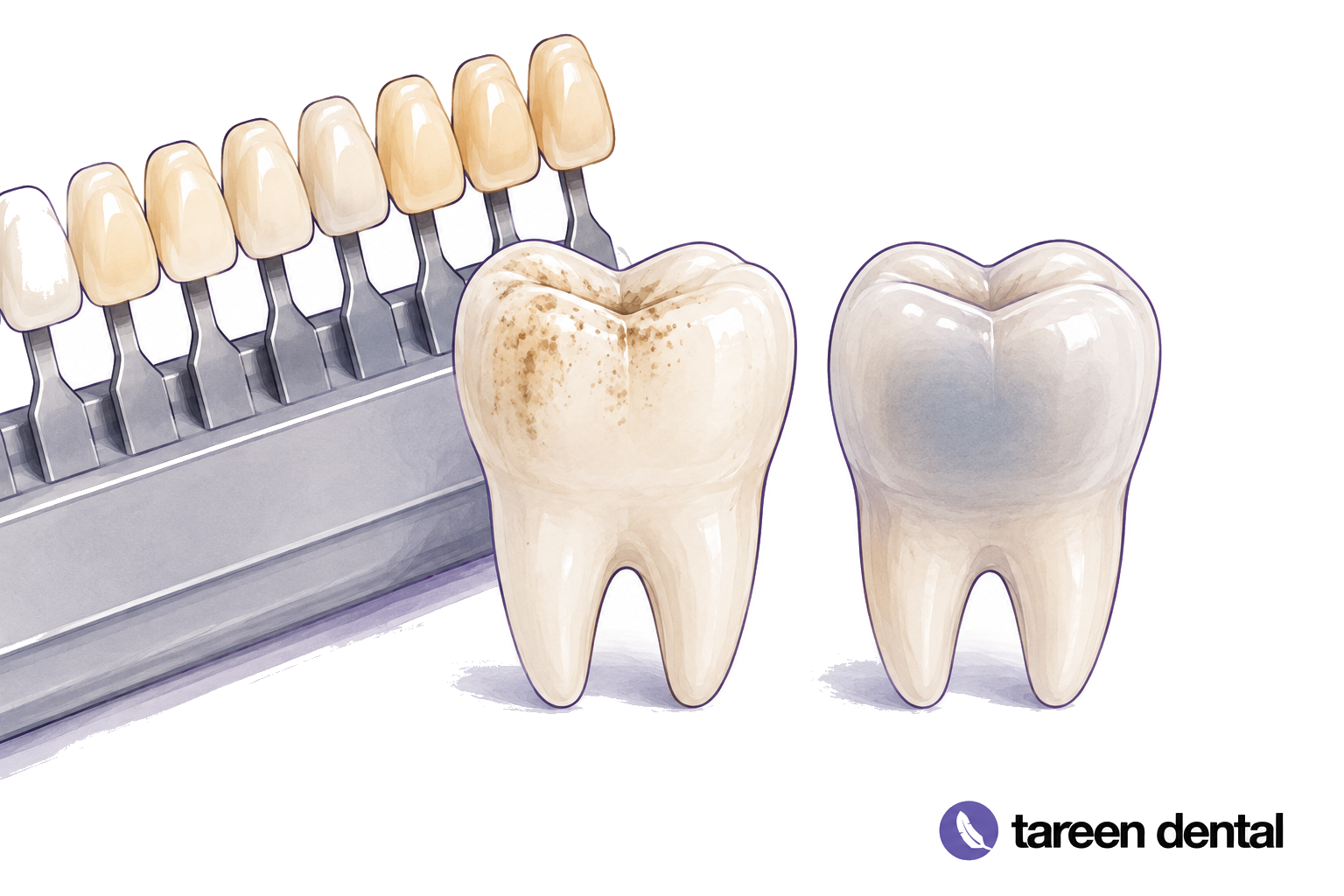
Teeth can change colour for different reasons. Some staining sits on the surface, while other changes arise within the tooth. Before choosing a whitening product, it helps to understand which kind of change you are trying to address.
Learn more about your care
Types of Tooth Stains
Appearance does not establish the cause
The ADA distinguishes external staining from internal discolouration. Foods, drinks and tobacco can contribute to surface stains, while other changes may relate to tooth development, ageing, restorations or the condition of the tooth. Whitening evidence overview.
A single tooth that changes colour, particularly after an injury, deserves assessment. Do not assume it is simply responding differently to coffee or that more whitening will correct it.
Ask whether cleaning or another approach is appropriate
Professional cleaning may address some surface deposits and staining. Whitening changes natural tooth colour in a different way. Decay, a damaged restoration or an affected tooth nerve requires its own assessment rather than a cosmetic cover-up.
Tell the dentist when the colour changed, whether all teeth are affected and whether you have sensitivity or pain. Mention previous trauma even if it happened years earlier.
Set a realistic cosmetic goal
Natural teeth are not all the same shade, and a healthy smile does not need to be uniformly bright white. Discuss what you want to change and what treatment can reasonably accomplish. Avoid scraping stains with sharp tools or using acidic home recipes that could harm the surface.
Tareen Dental offers cosmetic dental consultations in Windsor. Contact the clinic to assess a colour concern and distinguish health needs from optional cosmetic changes before choosing a product or procedure.
Sources and Further Reading
General patient education, not a diagnosis or personalised treatment plan. Contact a dental professional about your symptoms.
General information, not an individual treatment plan.