
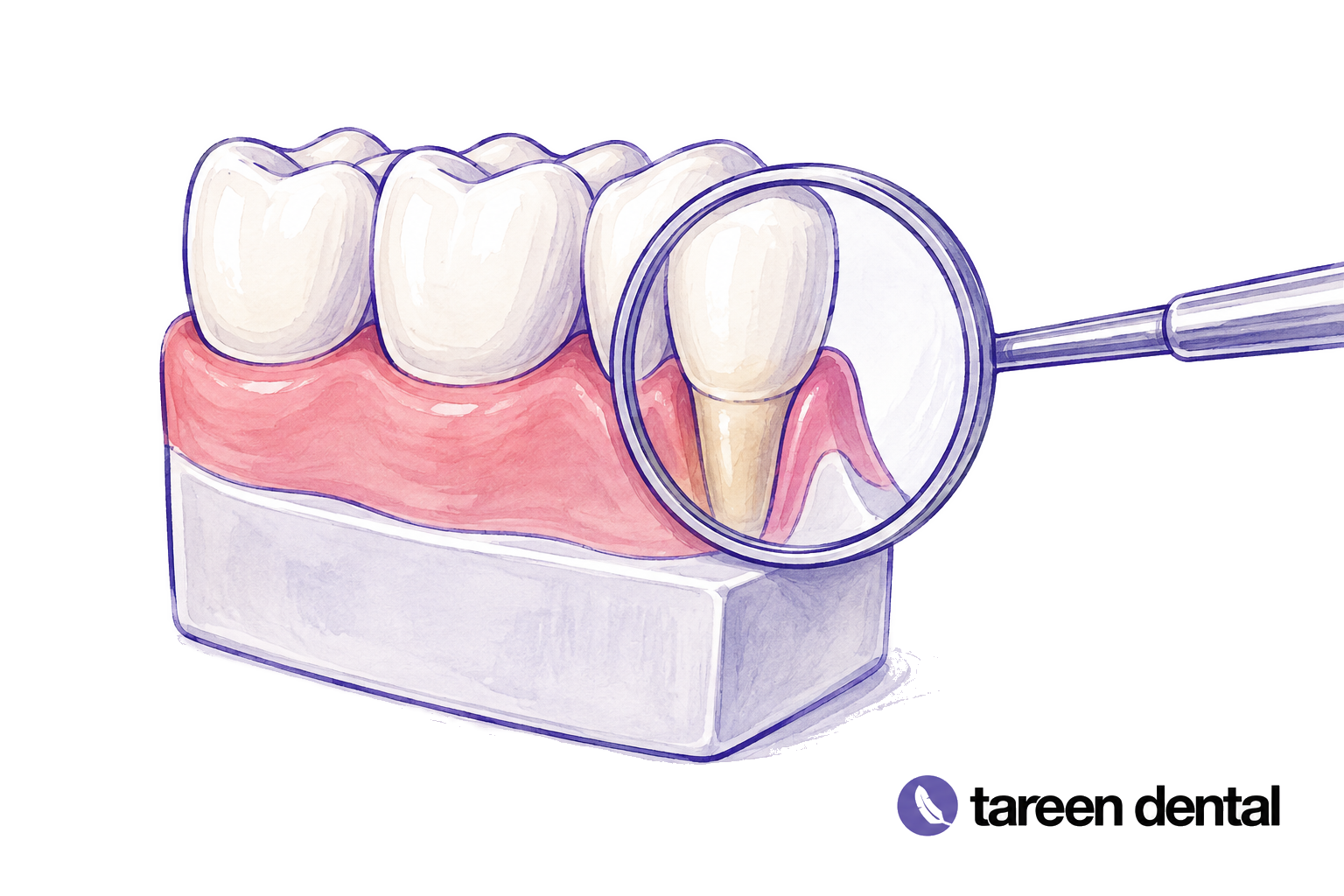
A tooth may appear longer when the gum margin has moved and more of its surface is visible. You might notice sensitivity first, or see a change in an older photograph. Gum recession deserves assessment because the cause and the best response are not the same for everyone.
Understanding the change you have noticed
Recession can occur alongside periodontal disease, but seeing an exposed area does not establish the diagnosis. The dentist considers gum health, tooth position, cleaning habits and the condition of surrounding tissues. Measurements and, when appropriate, imaging help assess whether tooth support has changed. NIDCR gum assessment guidance.
Tell the team whether the change seems recent or progressive. Mention orthodontic history, sensitivity and any difficulty cleaning the area. This helps make the examination more focused.
Protect the exposed surface
Exposed roots can be vulnerable to decay, and sensitivity can make people avoid cleaning them. A prevention plan may include gentler technique, appropriate fluoride and a product for sensitivity if suitable. NIDCR notes that recession can expose roots to decay-causing bacteria. Tooth-decay information.
Avoid harsh scrubbing and online remedies that promise to regrow gum tissue. A toothpaste may help with a specific symptom, but it does not replace an assessment or automatically restore a lost gum margin.
Ask what needs monitoring or treatment
Useful questions include: Is the area stable? Is there gum disease? What should I change at home? Would a specialist opinion be useful? Treatment may range from monitoring and prevention to care for sensitivity or referral, depending on the findings.
Bring up persistent pain, a new notch or a change in your bite rather than assuming all symptoms come from recession. Several conditions can affect the same tooth.
Tareen Dental can review gum recession during a Windsor dental examination and hygiene visit. Contact the clinic to discuss the change you have noticed.
Sources and Further Reading
General patient education, not a diagnosis or personalised treatment plan. Contact a dental professional about your symptoms.
General information, not an individual treatment plan.