
Composite Smile Design: Edges, Shape and Spacing
From the clinical portfolio of Dr. Fareed Tareen. Educational guide published by Tareen Dental.
A conversation about your smile
You may have a particular edge, shape or space you would like to discuss, without wanting to change everything about your smile. Bringing that question to a consultation is a useful starting point. The aim is to understand what matters to you and which options fit your teeth.
Learn about the procedure
Composite filling for a front tooth
This video explains a front-tooth composite filling. It introduces the material and technique; it is not a recording of these smile-design cases.
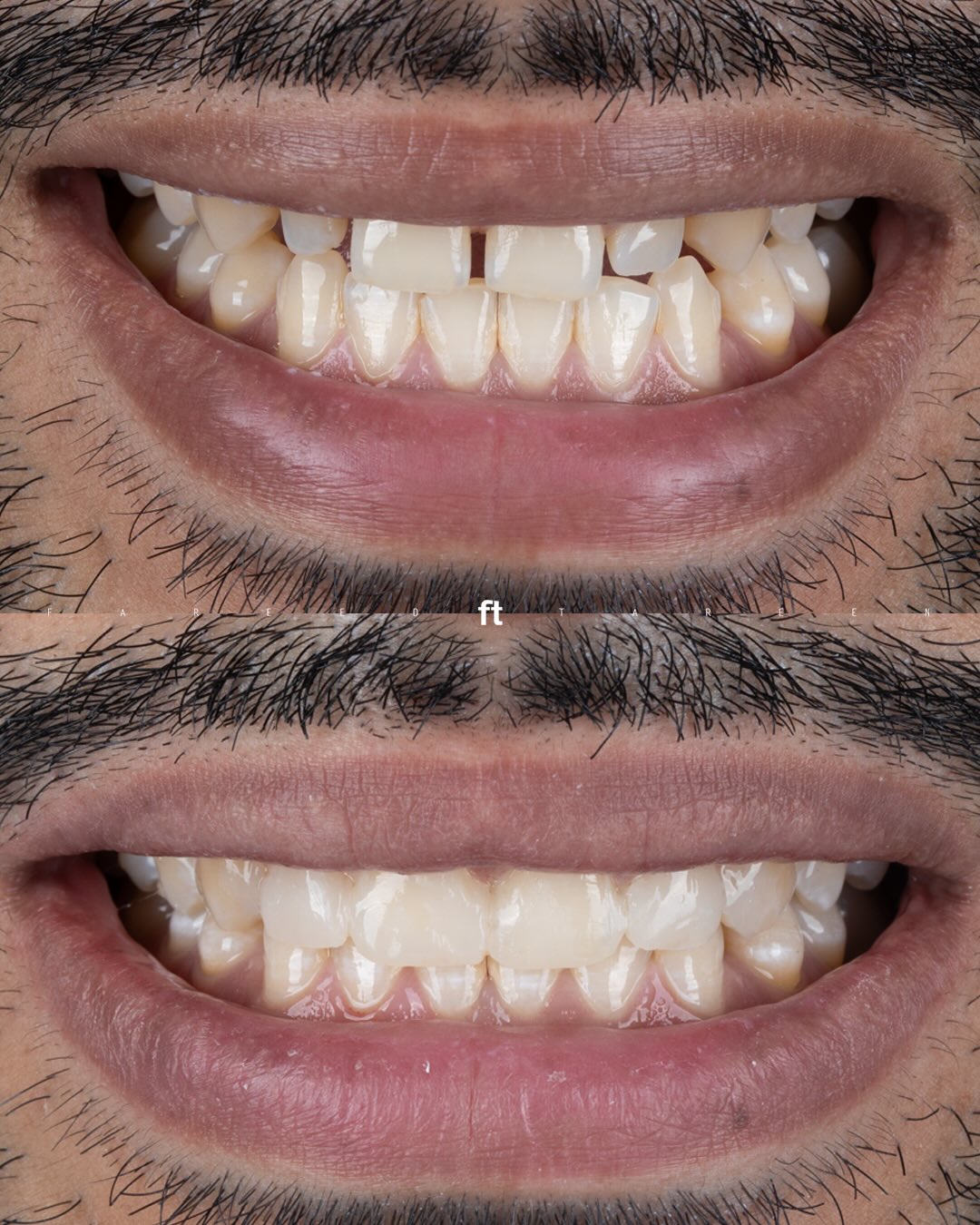
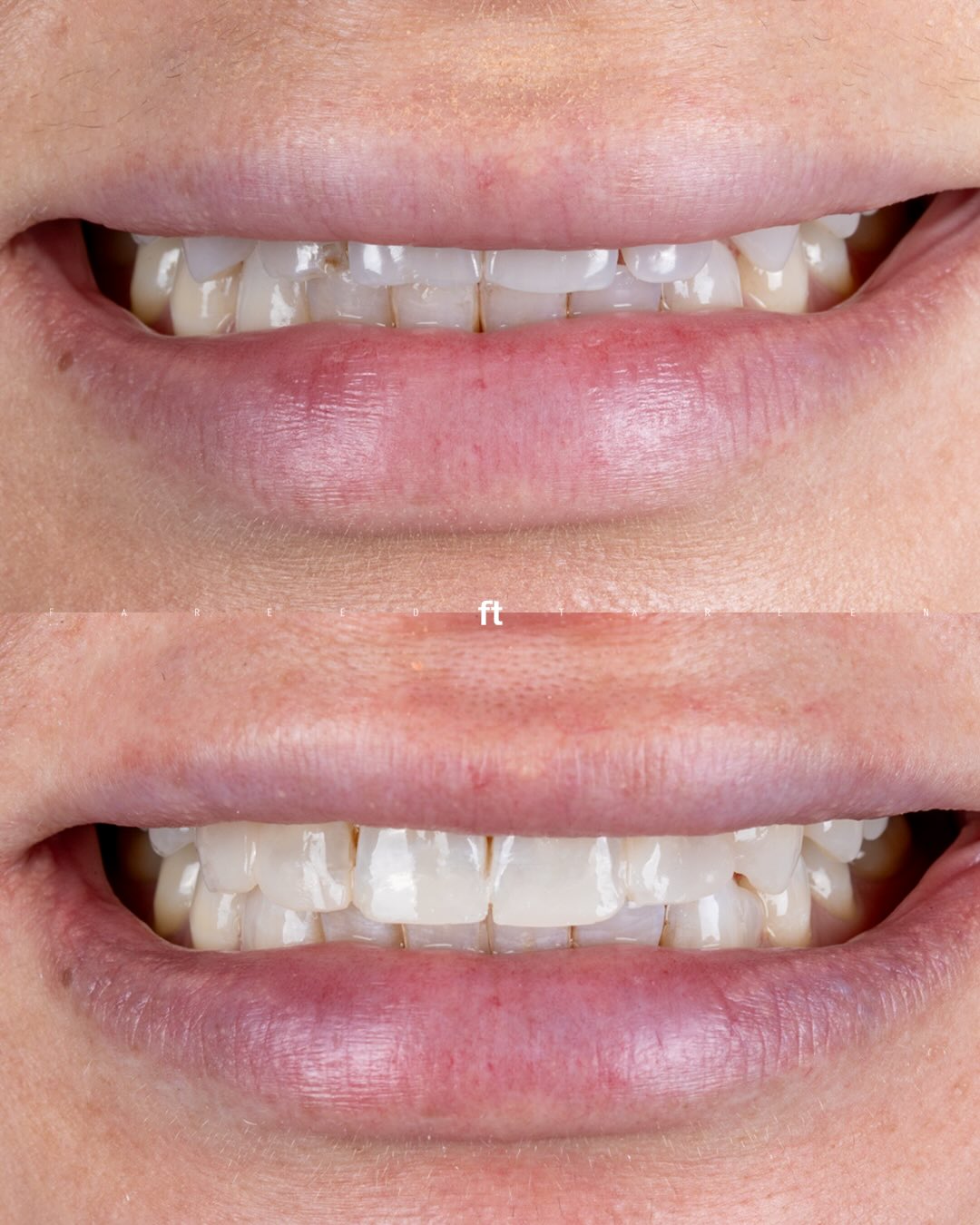
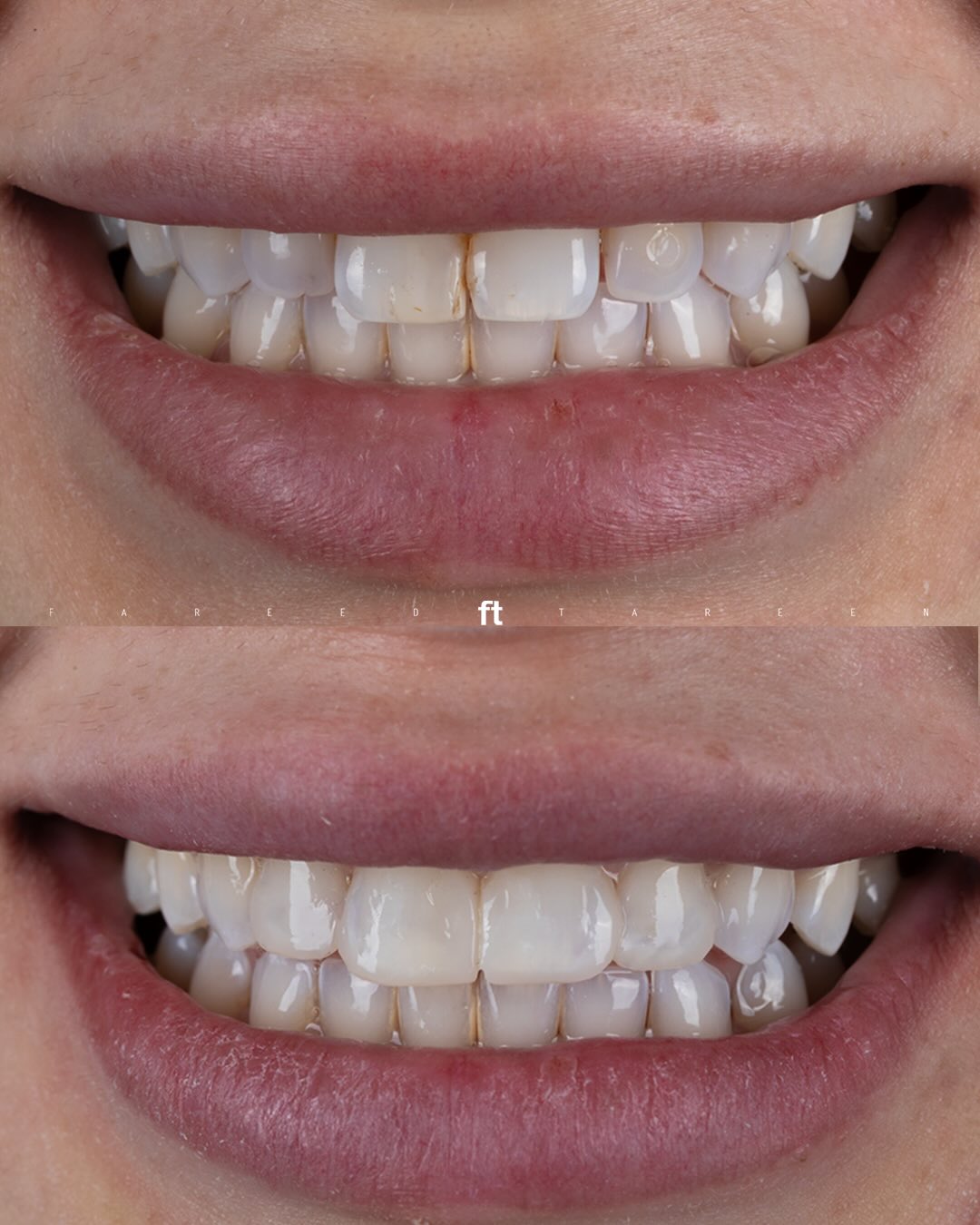
What these portfolio examples show
These three posts describe composite smile design, anterior composite restorations, and front-tooth edge enhancements with closure of spaces beside the lateral incisors. Each original comparison is shown below. The captions identify composite as the restorative material; they do not establish a treatment price, number of visits or long-term follow-up.
Understanding composite
Composite is a tooth-coloured resin that can be shaped on a tooth. Depending on the situation, bonding can alter a small edge, repair a chip or change a space. Suitability depends on the teeth and the proposed change, not simply on whether another person has a similar-looking smile.
Questions worth bringing
Which changes would involve adding material, and would any tooth preparation be needed? How would the proposed shape work with my bite? What maintenance or future repairs should I expect? Could another approach, or leaving things as they are, suit me better?
Your next step
At Tareen Dental on Lauzon Road in Windsor, you are welcome to bring a photograph or simply describe your concern. We can discuss the options and expected costs before you decide. These portfolio examples help start that conversation; they do not predict an individual result.
Continue exploring
Shared with permission from Dr. Fareed Tareen's clinical portfolio. Each example records a particular stage of care; results and suitable treatments vary. Your dentist can help you understand what is appropriate for you.
General information, not an individual treatment plan.