
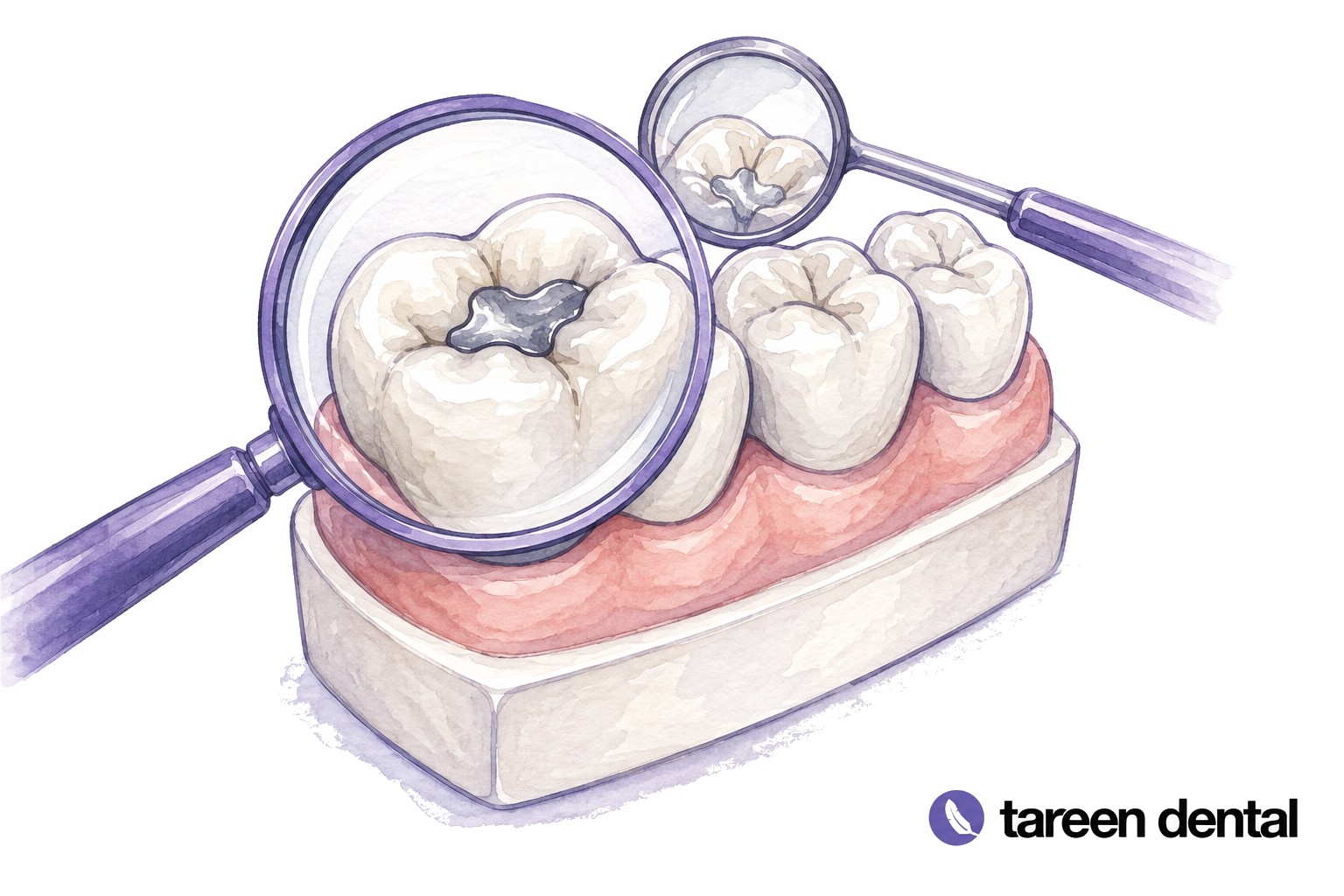
An old filling is not automatically a failed filling. Equally, a restoration that still looks acceptable may have a problem that needs attention. Decisions about monitoring, repair or replacement should be tied to the condition of the tooth and restoration, not just their age.
What needs to be checked?
The dentist considers wear, fractures, the restoration's edges, surrounding tooth structure and evidence of decay. Symptoms such as food catching or pain can help guide the examination. Imaging may add information when appropriate. NIDCR notes that fillings do not generally last a lifetime, but it does not assign an expiry date to every filling. Filling information.
Tell the dentist if the area has recently changed, even if the restoration was placed many years ago.
Understand the reason for the recommendation
Ask whether the issue is limited to a small area or affects the whole restoration. In some situations a repair or monitoring plan may be considered; in others replacement or a different type of restoration may be needed. The examination determines what is reasonable.
Changing a sound restoration solely for appearance is a different decision from treating active disease. Discuss the trade-offs, including the effect on remaining tooth structure, rather than assuming a newer material is automatically a health improvement.
Protect what remains
Keep cleaning around the filling and mention any difficulty reaching its edges. New decay can develop beside existing dental work. Avoid chewing hard objects or trying to smooth a rough edge yourself.
Tareen Dental provides family and restorative dental assessments in Windsor. Contact the clinic if an older filling feels different or you would like an explanation of a replacement recommendation.
Sources and Further Reading
General patient education, not a diagnosis or personalised treatment plan. Contact a dental professional about your symptoms.
General information, not an individual treatment plan.