
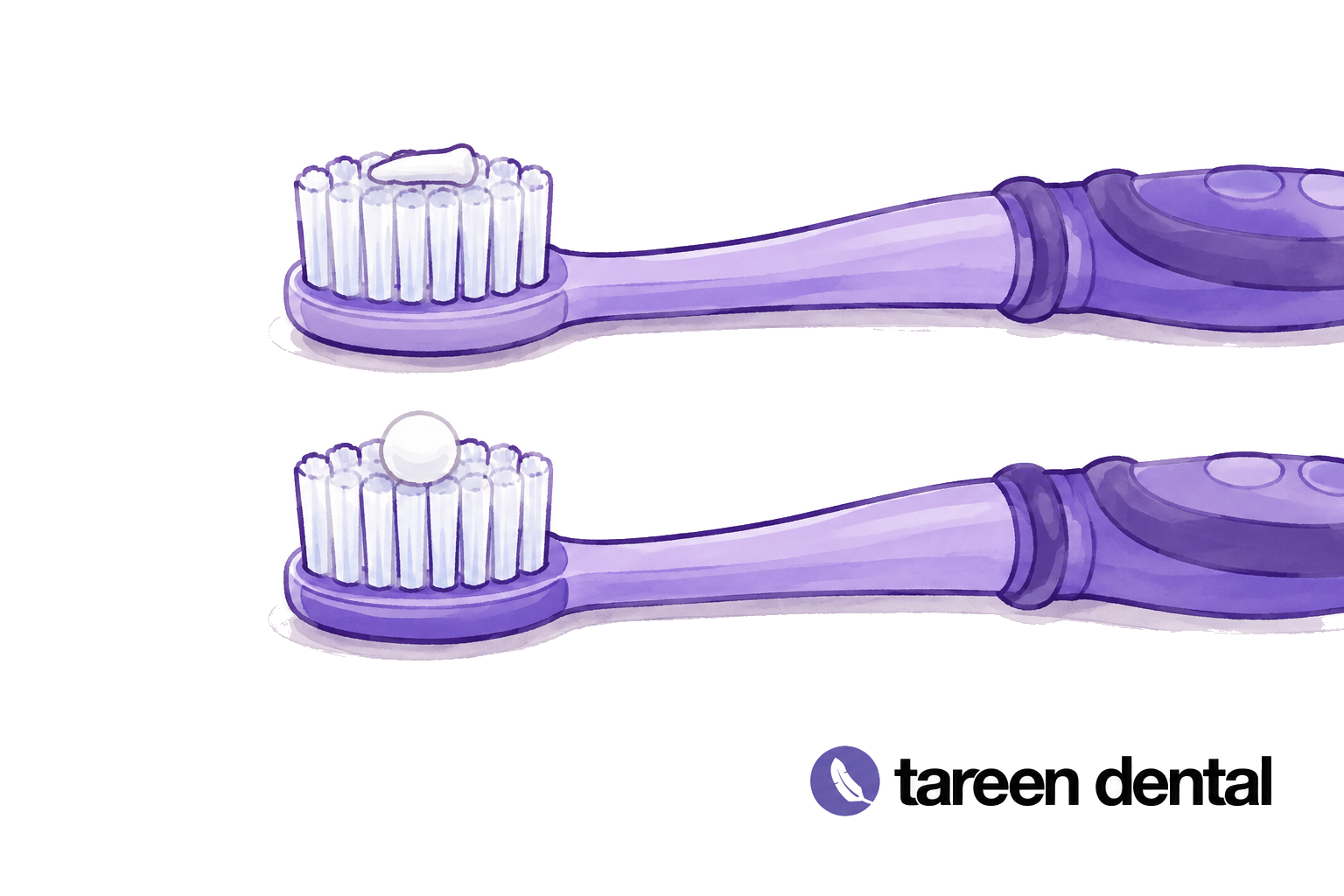
It can be hard to judge how much toothpaste belongs on a young child's brush. Amount, age, swallowing and cavity risk all matter. Canadian recommendations also differ in some details from advice families may read on international websites.
Use Canadian guidance for your child's plan
The Canadian Dental Association advises a risk-based decision about fluoride toothpaste for children younger than three. If a health professional identifies decay risk, an adult uses a minimal rice-grain-sized amount. For ages three to six, the guidance specifies a pea-sized amount with adult help. CDA fluoride questions.
Ask your dentist which recommendation applies to your child, especially if there are previous cavities, special health needs or uncertainty about other fluoride sources. Do not add supplements independently.
Adult help is about more than quantity
An adult should dispense the toothpaste, help with cleaning and encourage spitting rather than swallowing. Store the tube away from children. Flavoured toothpaste can be appealing to little ones, so help them practise spitting it out.
Bring the product name to a visit if you are unsure whether it contains fluoride or is appropriate. Labels such as natural or training do not answer every prevention question. The goal is a product and amount matched to the child, not simply using more.
Revisit the plan as the child grows
New teeth, changes in feeding and increasing independence can affect the routine. Ask how much supervision is still needed and what early changes should prompt a dental visit. Good prevention includes daily habits and professional assessment together.
Tareen Dental provides children's and family dental care in Windsor. Arrange an assessment for individual advice on toothpaste and cavity prevention.
Sources and Further Reading
General patient education, not a diagnosis or personalised treatment plan. Contact a dental professional about your symptoms.
General information, not an individual treatment plan.