
A toothache is not the starting point for every cavity. Decay can develop before you notice discomfort, which is one reason dental examinations are useful even when eating and drinking feel normal.
Learn more about your care
Progression of Decay
Pain is only one clue
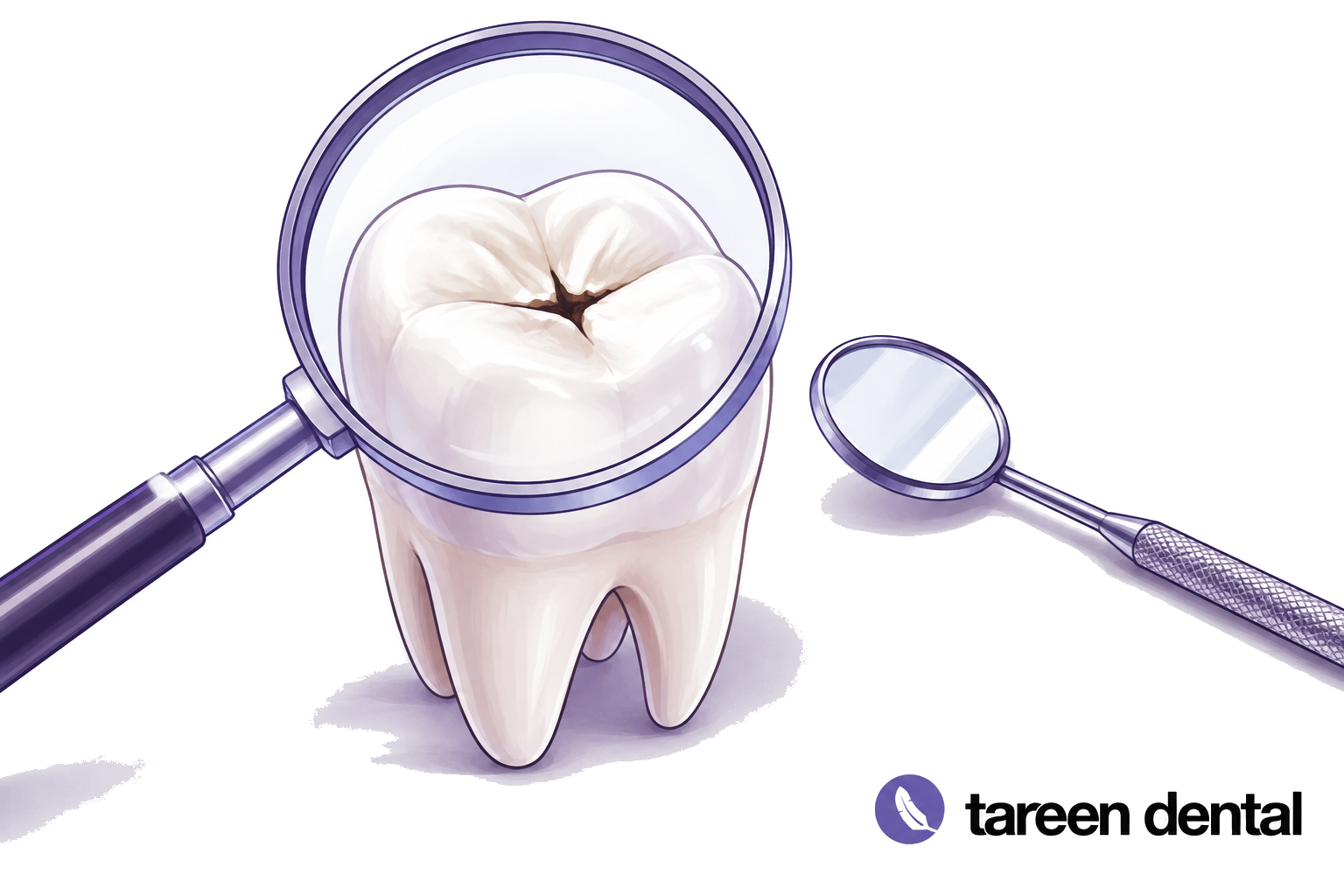
NIDCR notes that early decay often has no symptoms. As it advances, sensitivity or toothache may develop, but the pattern varies. A dark mark is not automatically a cavity either; staining and other changes can look similar without an examination. Tooth-decay information.
Do not test a suspicious spot with a pin or repeatedly bite hard foods to see whether it hurts. These experiments cannot establish the depth or activity of decay and may cause damage.
Why the recommended response may differ
Very early mineral loss can sometimes be managed with prevention and monitoring. A formed cavity may require a restoration. The dentist considers the tooth surface, extent of change, risk factors and imaging when appropriate before recommending a plan.
Ask what the finding shows, whether it is changing and what monitoring or treatment is intended to achieve. If you are uncertain, request a plain-language explanation of the evidence rather than relying on pain as the deciding factor.
Address the reason decay developed
Review fluoride use, cleaning, frequent snacks or drinks and dry mouth. Filling one cavity does not automatically change the conditions that contributed to it. A useful plan includes both the tooth and prevention for the rest of the mouth.
Tareen Dental provides family dental examinations in Windsor. Contact the clinic to arrange an assessment of a visible change or discuss prevention, even if the tooth does not currently hurt.
Sources and Further Reading
General patient education, not a diagnosis or personalised treatment plan. Contact a dental professional about your symptoms.
General information, not an individual treatment plan.